Submit the form below and one of our estimators will get back to you shortly.
*We respect your privacy and will not share your information.
Chip & Seal Paving for Driveways and Rural Roads Across DFW
Not every driveway or rural road needs a full asphalt surface, and not every property owner wants to pay for one. Chip and seal, known just as often as tar and chip or armour coat depending on who you ask, gives you a durable, textured driving surface at a fraction of the cost and disruption of a full asphalt install.
Gentry’s Paving Group has been installing chip and seal surfaces across the Dallas-Fort Worth metroplex since 1988. It’s one of the services we’re most known for locally, especially during the winter months when we shift our crews to chip and seal while asphalt plants across Texas are closed.
Ready to talk about chip and seal, tar and chip, or armour coat for your property? Call (972) 792-0000 or fill out our contact form to get started.
What Chip & Seal Involves
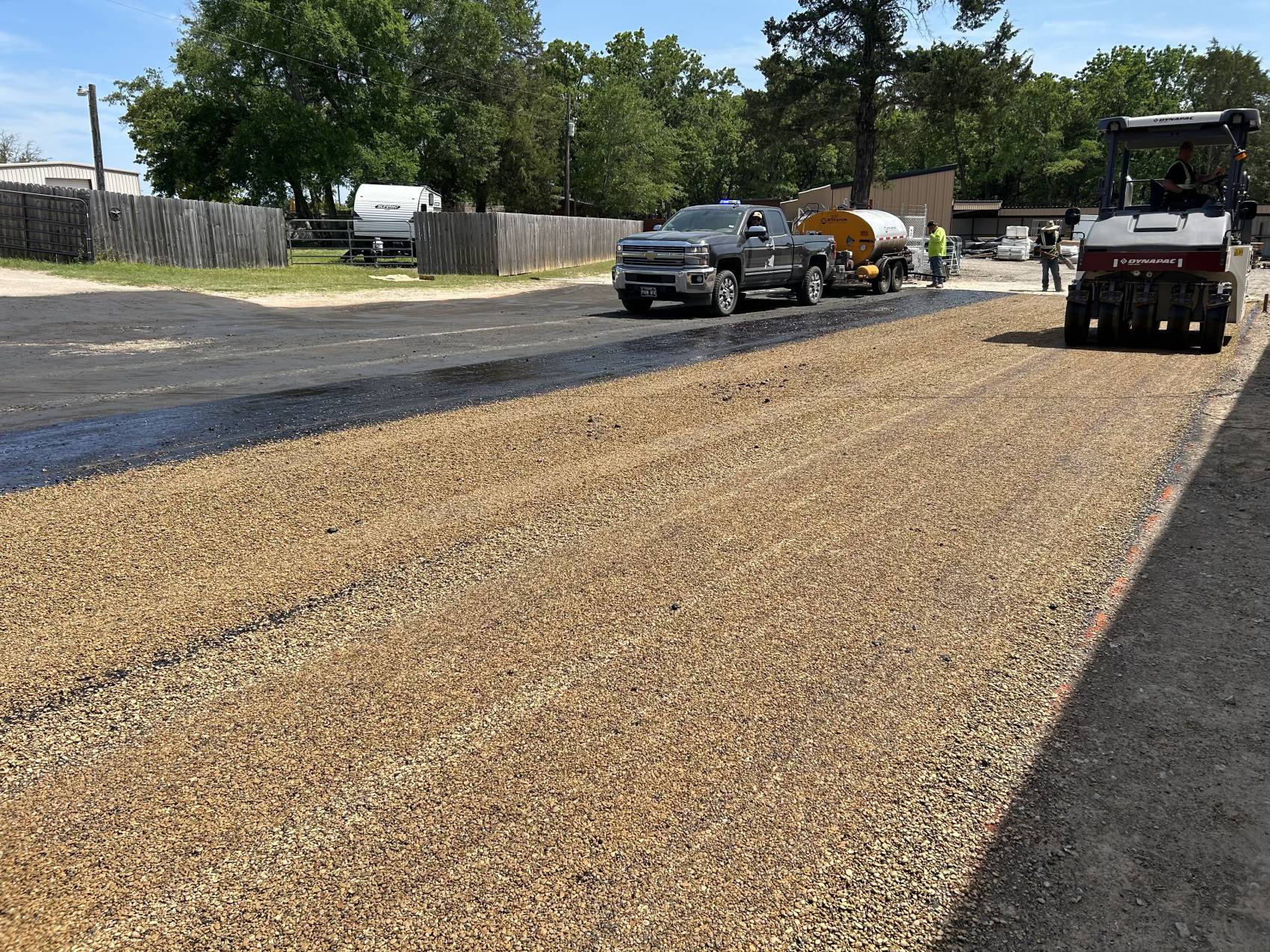
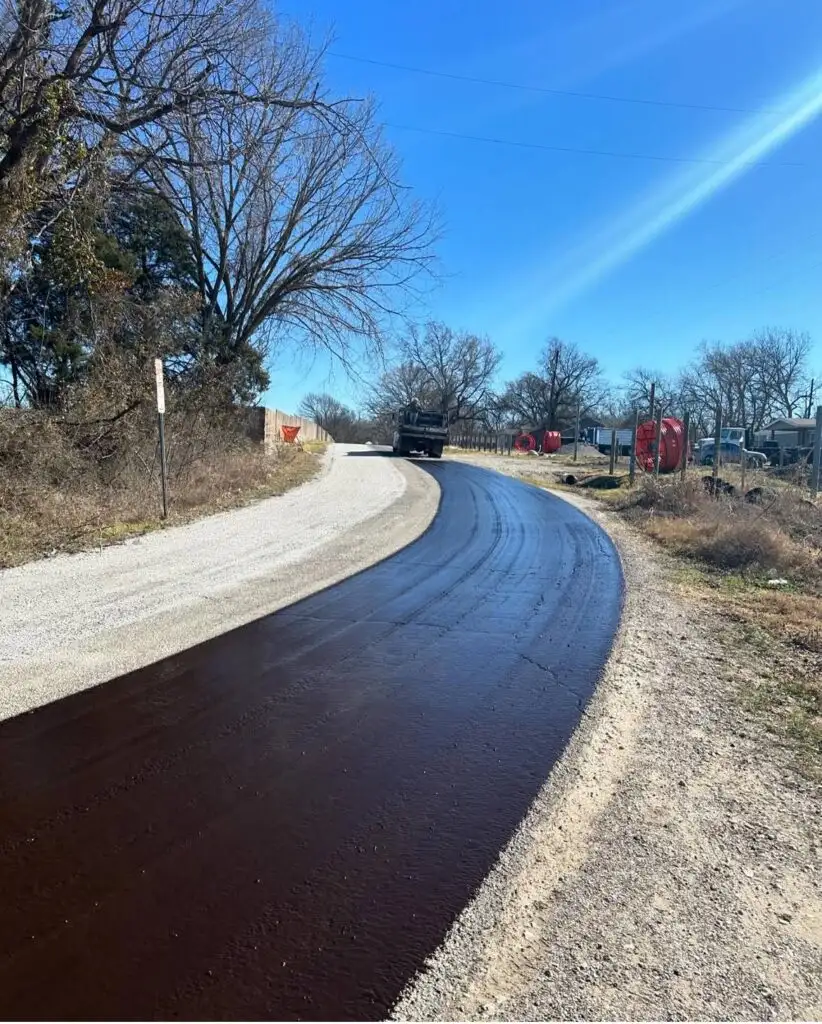
Chip and seal is a surface treatment, not a poured asphalt surface. A liquid asphalt binder is sprayed directly onto the prepared driveway or road, and while that binder is still tacky, a layer of crushed stone aggregate is spread evenly across it. Heavy rollers then press the stone into the binder, locking the two together into a bonded, textured driving surface. Whether you hear it called chip and seal, tar and chip, or armour coat, it’s the same process, just different names used across different parts of the country.
Because it doesn’t require hot mix asphalt plants to be running, chip and seal is a viable option year-round in North Texas, including during the winter months when local plants shut down. That’s part of why it’s become such a natural specialty for our crews here at Gentry’s Paving Group: it’s work we can keep doing when full asphalt paving isn’t an option.
Chip and seal is a common choice for long rural driveways, ranch and acreage entrances, and lower-traffic private roads, where a full asphalt install would cost significantly more without adding much practical benefit.
What’s Included in Chip & Seal (Tar & Chip / Armour Coat)
- New driveway chip and seal installation. For properties where a textured surface treatment makes more sense than full asphalt paving.
- Rural and private road tar and chip. Lower-traffic roads and access lanes on larger properties.
- Chip seal over existing surfaces. In many cases, chip and seal can go directly over an existing worn surface without full removal.
- Fog seal finishing. A thin, additional emulsion layer applied after sweeping to help lock in aggregate and improve appearance.
- Post-installation sweeping. Removing excess loose stone after the surface has cured.
If your property needs a full asphalt surface rather than a chip and seal surface treatment, that falls under our Asphalt Paving services for driveways, parking lots, and roads.
Our Process
- Site evaluation and surface prep. We assess whether the existing surface, whether it’s dirt, gravel, or worn asphalt, is ready for armour coat application, and we fill cracks or patch potholes ahead of time if needed.
- Grading and base check. For gravel or dirt surfaces, we grade and compact a base before any binder goes down, since chip and seal still needs a stable foundation underneath it.
- Binder application. Using a distributor truck, we spray a hot liquid asphalt binder evenly across the prepared surface. This step moves quickly, since the aggregate has to go down while the binder is still tacky.
- Aggregate spreading. Immediately after the binder is applied, we spread a uniform layer of crushed stone chips across the surface. Getting the coverage right here, enough stone to bond properly without excess buildup, is one of the details that separates a good chip and seal job from a rough one.
- Rolling and compaction. Heavy rollers press the aggregate into the binder, orienting the stone and locking it into place. This step is what determines whether the finished surface holds together or sheds loose gravel indefinitely.
- Curing. We give the surface time to cure before it’s reopened to regular traffic, timed around the weather, since warmer, dry conditions cure the binder faster than cold or wet ones.
- Sweeping. After the surface has cured, we sweep away excess loose aggregate that didn’t bond into the binder. Some loose stone in the days immediately after installation is completely normal, not a sign of a bad job.
Signs Chip & Seal Might Be Right for Your Property
- A long driveway or rural road where full asphalt would cost more than the traffic justifies. Chip and seal gives you a durable surface without paying for a heavier-duty install you don’t need.
- A gravel driveway that’s become difficult to maintain. Tar and chip locks the surface together, cutting down on the ongoing grading and gravel replacement that loose gravel drives require.
- A rural or ranch entrance that sees light, infrequent traffic. Armour coat holds up well under this kind of use without the cost of a full paving project.
- An existing surface that’s worn but structurally fine. Chip and seal can often go directly over it rather than requiring removal.
When and How Often
Chip and seal generally cures best in warm, dry conditions, but North Texas winters are mild enough that our crews stay busy with chip and seal work through January and February, exactly the window when Texas asphalt plants close for the season. That’s not a coincidence. It’s the reason chip and seal has become such a core part of what we do this time of year. Outside of winter, we still install chip and seal for rural roads and driveways when it’s the right fit for the property, regardless of season. A newly installed surface will shed some loose stone in its first days before we sweep it clean, and after that, most chip and seal surfaces hold up well for years before needing a fresh application.
Why Chip & Seal With Gentry’s Paving Group
Chip and seal, tar and chip, and armour coat all mean the same thing, and knowing that isn’t just trivia, it’s the reason we get calls from property owners who’ve been quoted one term by another contractor and started wondering if they need something different. We don’t make you guess. If you’re calling about a rural driveway that needs armour coat, or a ranch road that needs tar and chip, you’re describing the same job either way, and it’s a job our crews have done for 35+ years across North Texas.
Because chip and seal is our specialty during the exact months when most asphalt contractors go quiet, we’ve had decades to refine the details that matter most: how much aggregate coverage a specific surface needs, how weather affects curing time on any given week, and how to keep a long rural driveway or private road looking right without overspending on a full asphalt install it doesn’t need. James Gentry and our crew treat a chip and seal driveway with the same care as a full paving job, because for a lot of our residential and rural clients, it’s the project that actually fits their property best.
Where We Install Chip & Seal, Tar & Chip, and Armour Coat
Chip and seal tends to show up most on the kinds of properties that make up a good share of our service area outside the immediate Heath area: longer rural driveways, ranch and acreage entrances, and private roads in communities like Terrell, Kaufman, Royse City, and Greenville that see more of this style of property than a denser city lot would. That said, we install chip and seal, tar and chip, and armour coat surfaces anywhere within our standard 45 to 60 mile service radius around Heath, Texas, including closer-in communities like Rockwall, Forney, Mesquite, Garland, Rowlett, Wylie, and Sunnyvale, wherever a surface treatment is the better fit than full asphalt.
FAQ
Is chip and seal cheaper than asphalt?
It’s generally a more affordable surface treatment option than a full asphalt install, since it uses less material and doesn’t require the same base construction as new paving. The right choice depends on your traffic volume and what you need the surface to hold up to long-term.
Why is there loose gravel on my driveway after chip and seal?
Some loose aggregate on the surface immediately after installation is completely normal. It’s excess stone that didn’t bond into the binder, and it gets swept away once the surface has cured. It’s not a sign that something went wrong.
What’s the difference between chip and seal, tar and chip, and armour coat?
Nothing. They’re different regional names for the same surface treatment process: liquid asphalt binder sprayed onto the surface, followed by aggregate that’s rolled and embedded into it.
Can chip and seal go over my existing gravel driveway?
In many cases, yes, once the surface has been properly graded and compacted. We’ll assess your specific driveway during our site evaluation.
What affects the cost of a chip and seal project?
Cost factors include the size and length of the surface, the current condition of what’s underneath, and how much grading or prep work is needed before the binder and aggregate go down. We provide a specific quote after evaluating your property.
Do you only do chip and seal in the winter?
Winter is when we focus heavily on it, since it’s a great fit for that season and our crews have more availability while asphalt plants are closed. We install chip and seal, tar and chip, and armour coat surfaces year-round when it’s the right fit for a property, not just during that window.
Ready to Talk About Chip & Seal for Your Driveway or Road?
Whether you’re calling it chip and seal, tar and chip, or armour coat, Gentry’s Paving Group is ready to help. Call (972) 792-0000 or fill out our contact form to schedule a site evaluation.
Gentry’s Paving Group | 457 Laurence Drive, Suite 404, Heath, TX 75126 | (972) 792-0000