Submit the form below and one of our estimators will get back to you shortly.
*We respect your privacy and will not share your information.
Base Work That Determines Whether Your Pavement Lasts or Fails
Every driveway, parking lot, and road that fails prematurely fails for the same underlying reason: something went wrong below the surface, not on it. Base work, the excavation, grading, and soil stabilization that happens before any asphalt or concrete goes down, is what determines whether a pavement lasts for decades or starts cracking within a few years.
Gentry’s Paving Group performs base work across the Dallas-Fort Worth metroplex as part of nearly every paving project we take on, and as a standalone service for property owners who need the ground itself addressed before building on it. This work matters more in North Texas than in a lot of the country, because of what’s actually in the ground here.
Have a site that needs grading, excavation, or stabilization? Call (972) 792-0000 or fill out our contact form to talk it through.
What Base Work Involves
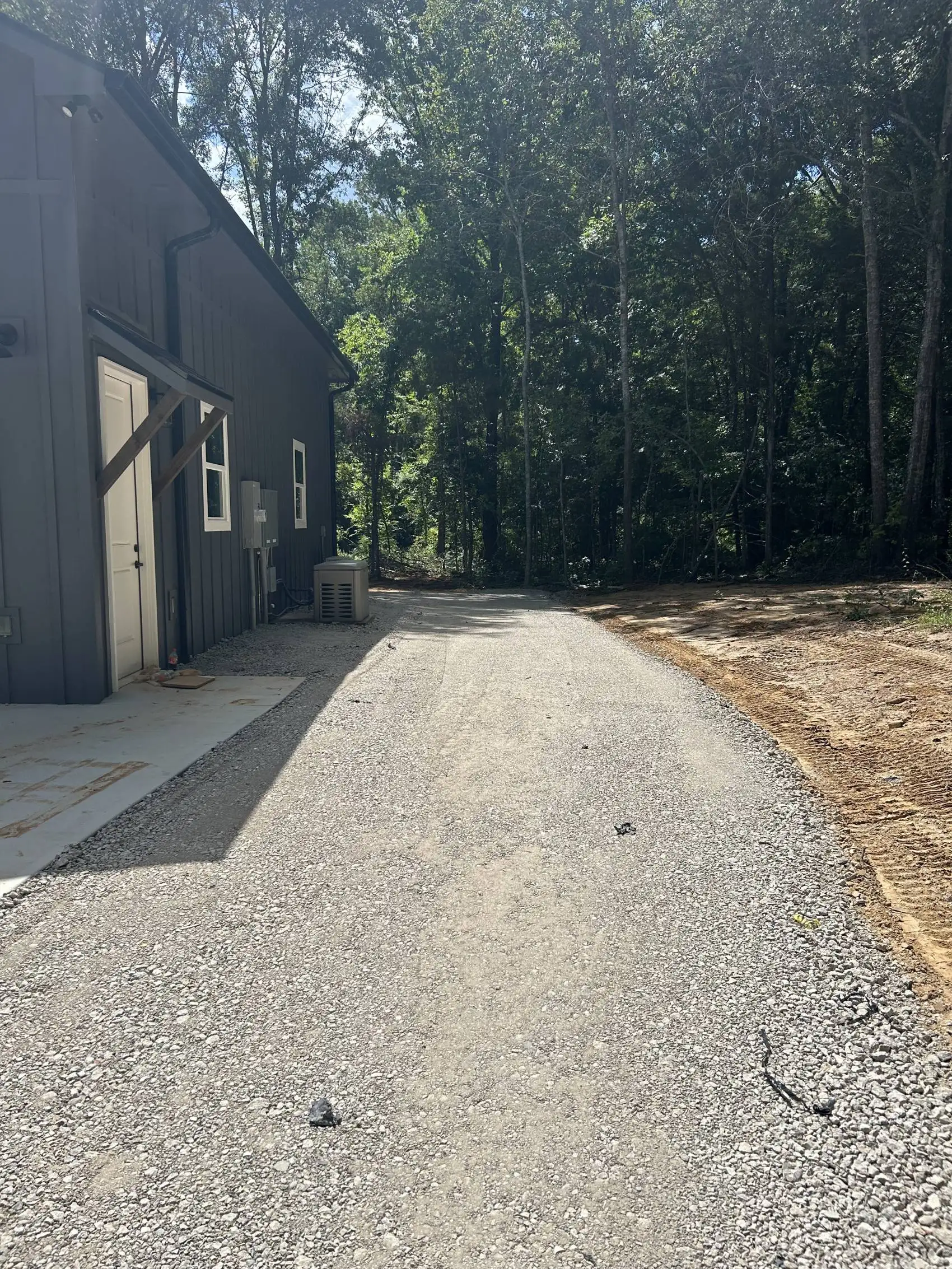
Base work covers excavation, grading, subgrade stabilization, and repairs to the foundation layer beneath any paved surface. It’s not a visible finished product the way a driveway or parking lot is. It’s the work that determines whether that finished surface actually holds up.
Much of North Texas sits on expansive clay soil, part of the Blackland Prairie belt that runs through this region. That soil swells when it takes on moisture and shrinks as it dries out, and that movement doesn’t stay in the ground. It telegraphs upward into whatever’s built on top of it: hairline cracks that widen over a season, pavement that heaves along a trench line, sections that shift with every wet-to-dry cycle. This isn’t a one-time settling issue. It’s seasonal, which means a base that isn’t properly addressed will keep causing problems year after year, not just once.
That’s why base work isn’t something we skip or rush, even on jobs where it’s not the most visible part of the project. Excavating down to stable ground, grading correctly for drainage, and stabilizing reactive clay where it’s present are the steps that decide whether everything poured or paved on top of that ground will actually last.
What’s Included in Base Work
- Excavation. Removing existing pavement, topsoil, and unstable material down to a workable subgrade.
- Grading. Establishing the correct slope for drainage before any base material or pavement goes down.
- Soil stabilization. Treating expansive clay or unstable subgrade with lime or cement to reduce swelling and create a stable foundation.
- Aggregate base placement and compaction. Building the structural base layer that will support asphalt or concrete above it.
- Base repairs. Addressing failed or compromised base sections under existing pavement.
If your project is ready for paving and just needs the surface work, that falls under our Asphalt Paving or Concrete Work services.
Our Process
- Site and soil assessment. We look at the existing ground conditions, checking for signs of expansive clay, poor drainage, or unstable soil before recommending an approach. What’s happening below the surface determines everything that follows.
- Excavation. We remove existing pavement, topsoil, and organic material down to a stable subgrade, clearing the way for proper base construction.
- Grading for drainage. We establish the correct slope before anything else goes down, since water that isn’t directed away from the site will undermine even a well-stabilized base over time.
- Soil stabilization where needed. For reactive clay subgrade, we treat the soil with lime or cement to reduce its tendency to swell and shrink with moisture changes, converting unstable clay into a workable, stable foundation rather than removing and replacing it entirely.
- Compaction testing and proof rolling. We compact the treated or prepared subgrade and check it for soft spots before moving forward, catching weak areas while they’re still easy to fix.
- Aggregate base placement. We place and compact a crushed stone base layer on top of the stabilized subgrade, building the structural foundation that will carry the finished pavement.
- Handoff to paving or concrete work. Once the base is complete, the site is ready for asphalt paving or concrete flatwork, whichever the project calls for.
Warning Signs Your Base Needs Attention
- Cracking that reappears in the same spot season after season. This pattern, rather than a one-time crack, points to reactive clay movement underneath rather than a simple surface issue.
- Pavement heaving or bumps along a trench line or utility cut. This usually means the backfill or base material wasn’t properly compacted or stabilized.
- Standing water that never seems to drain. Poor grading at the base level, not just the surface, is often the real cause.
- Sections of pavement that visibly shift or settle with the seasons. Movement that tracks wet and dry periods is a strong sign of unaddressed expansive clay underneath.
Why Base Work Gets Different Treatment at Gentry’s Paving Group
A lot of pavement failure across North Texas doesn’t start with bad asphalt. It starts with someone skipping or shortcutting the base work because it’s the part nobody sees once the project is finished. We build our own paving jobs on top of properly excavated, graded, and stabilized ground, because we’re the ones who end up dealing with the callback if the base fails a year later. That’s the same standard we bring when base work is the entire job, not just the first step of a bigger one.
Because expansive clay is a genuine regional issue here, not a hypothetical one, this is a part of the process we don’t treat as optional or interchangeable across sites. What a sandy lot near Terrell needs and what a heavy clay site closer to Dallas needs aren’t the same, and we assess each site on its own conditions rather than applying one standard approach everywhere.
Where We Offer Base Work
We perform base work anywhere we’re doing paving or concrete work across our standard service area around Heath, Texas, and we also take on base work as a standalone service for property owners dealing specifically with unstable or reactive soil, including in areas like Kaufman, Terrell, and Royse City where clay conditions are a known local factor. Our full service area covers a 45 to 60 mile radius for residential work and 60 miles for commercial and industrial work, reaching communities including Rockwall, Mesquite, Garland, Rowlett, Wylie, Sunnyvale, and Greenville.
FAQ
Why does Texas clay soil affect pavement?
Much of North Texas sits on expansive clay that swells when it absorbs moisture and shrinks as it dries. That constant movement pushes up into whatever’s built on top of it, causing cracking and heaving that tends to recur with the seasons rather than happening just once.
Do I need base work before paving?
In almost every case, yes. The base is what supports the finished pavement, and skipping proper excavation, grading, or stabilization is one of the most common reasons pavement fails early, regardless of how good the asphalt or concrete above it is.
Can you fix a base that’s already failed under existing pavement?
Yes, base repairs are part of this service. We assess what’s causing the failure and address it, which sometimes means the pavement above needs to come up first.
How do you treat expansive clay soil?
We stabilize reactive clay subgrade using lime or cement treatment, which changes the soil’s structure to reduce its tendency to swell and shrink with moisture. This creates a stable foundation without needing to excavate and replace the clay entirely.
Do you offer base work as its own service, or only as part of paving projects?
Both. Base work is part of nearly every paving project we do, but we also take it on as a standalone service for property owners dealing with drainage or soil stability issues.
What affects the cost of a base work project?
Cost factors include the extent of excavation needed, whether soil stabilization is required, the site’s drainage needs, and the overall size of the area being addressed. We provide a specific quote after our site and soil assessment.
Ready to Talk About What's Under Your Pavement?
Whether you’re planning a new paving project or dealing with recurring cracking and heaving on an existing surface, Gentry’s Paving Group is ready to take a look at what’s happening below ground. Call (972) 792-0000 or fill out our contact form to schedule a site assessment.
Gentry’s Paving Group | 457 Laurence Drive, Suite 404, Heath, TX 75126 | (972) 792-0000