Submit the form below and one of our estimators will get back to you shortly.
*We respect your privacy and will not share your information.
Asphalt Repairs That Stop Small Damage Before It Becomes a Full Replacement
A pothole doesn’t stay a pothole. Once water gets underneath cracked or broken asphalt, it keeps working at the base until a small problem spreads into a much bigger one. Asphalt repairs done correctly, cutting out the damaged area, addressing what’s underneath, and properly bonding new material to the old, stop that process before it turns into a full repaving job.
Gentry’s Paving Group has been repairing driveways, parking lots, and roadways across the Dallas-Fort Worth metroplex since 1988. Our crew handles patchwork, pothole repair, and catch basin repair for both residential and commercial properties, always starting with an honest look at what’s actually causing the damage.
Have damage that needs attention? Call (972) 792-0000 or fill out our contact form to get started.
What Asphalt Repairs Involve
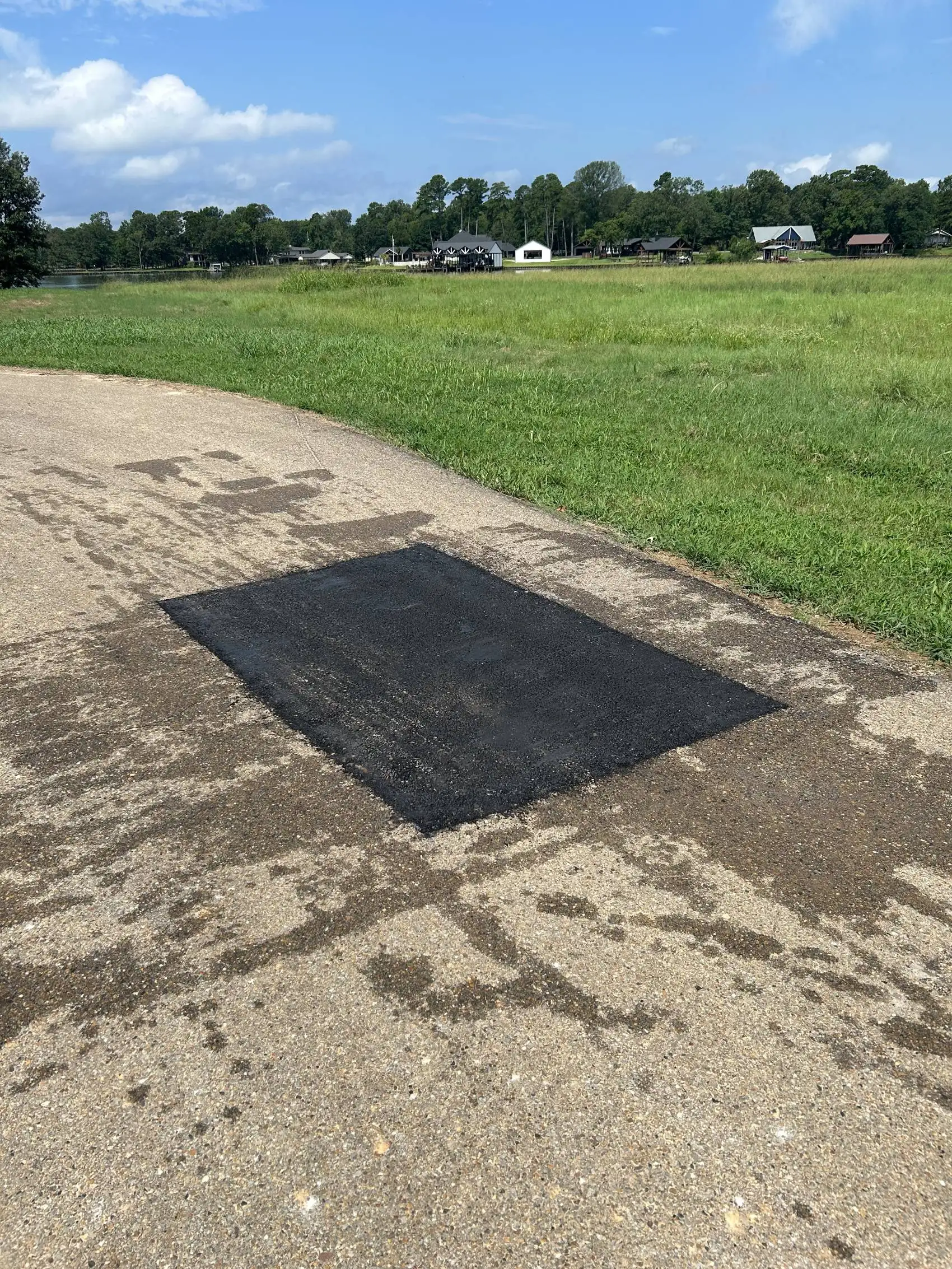
Asphalt repairs address localized damage, potholes, cracked or crumbling patches, and failing catch basins, without requiring a full repaving or reconstruction of the surrounding pavement. That makes repairs different from milling and paving, which restores worn surfaces across a larger area, and different from full paving, which rebuilds a surface from the ground up.
The quality of a repair depends almost entirely on what happens before new asphalt ever goes in. Cutting clean edges around the damaged area, removing material down to firm, stable pavement, and properly bonding the new patch to the old surface are what separate a repair that lasts for years from one that fails again within a season. A patch that’s just dumped into a hole without proper prep will crack loose at the edges as soon as water finds its way back in.
Catch basins fail differently than the surrounding pavement. Because they’re a fixed point set into the asphalt, the pavement around them takes repeated impact from traffic and water flow, which can cause settling, cracking, or a mismatch between the grate and the surrounding surface over time.
What’s Included in Asphalt Repairs
- Pothole repair. Cutting out and properly patching potholes so they don’t reopen after the next rain.
- Patchwork. Repairing cracked, crumbling, or damaged sections of pavement that don’t require a full resurfacing.
- Catch basin repair. Fixing settled, cracked, or misaligned catch basins where the pavement meets the drainage structure.
- Utility cut repair. Restoring pavement after utility trenching or other excavation work.
- Edge and transition repair. Fixing damage at curbs, entrances, or where pavement meets another surface.
If your pavement has damage spread across a wider area rather than isolated spots, that’s better addressed through our Asphalt Milling & Paving service.
Our Process
- Damage assessment. We look at the extent and cause of the damage, whether it’s an isolated pothole, a section of cracked pavement, or a failing catch basin, before deciding on a repair approach. Understanding what caused the damage matters as much as fixing what’s visible.
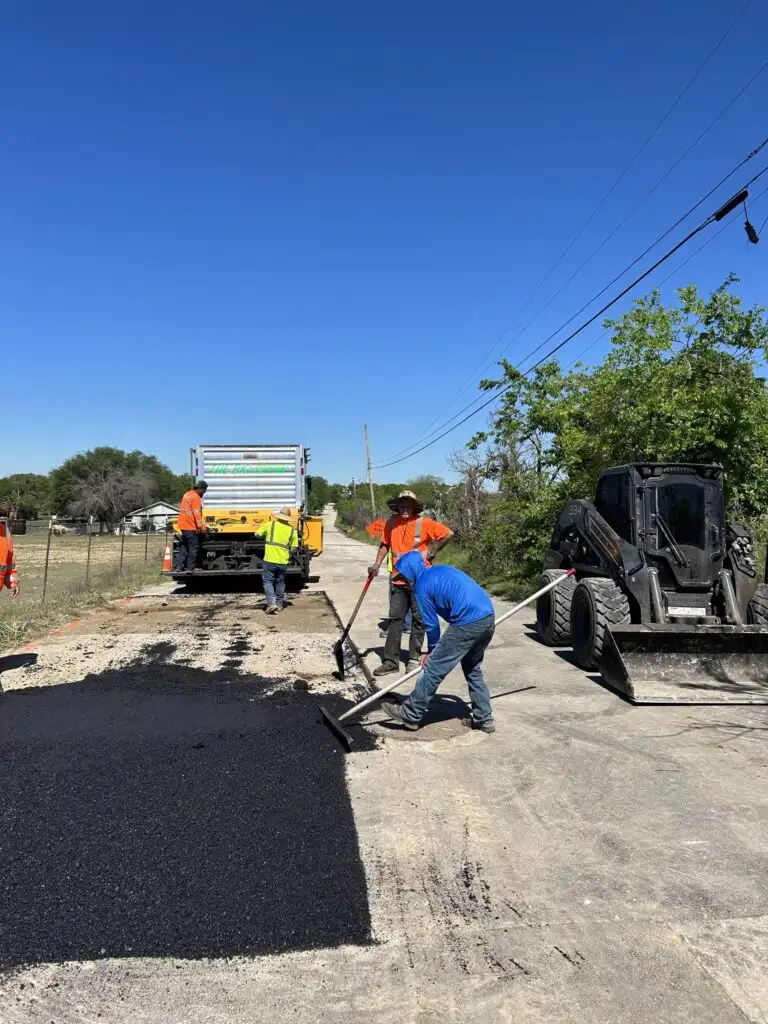
- Marking and cutting the repair area. We mark the damaged area and cut clean, square or rectangular edges around it, extending slightly beyond the visible damage into solid, undamaged pavement. Clean, straight edges give the new patch something stable to bond against, rather than tapering off into more damaged material.
- Removing damaged material. We excavate the marked area down to firm, stable base, removing any crumbling asphalt or compromised subgrade underneath. If a pothole formed because water reached the base, patching over that weakened base without fixing it first just guarantees the repair will fail again.
- Cleaning the repair area. We clear loose material and debris from the cut area before applying anything, since dust and debris left behind will prevent the new asphalt from bonding properly.
- Applying a tack coat. We coat the edges and base of the repair area with an asphalt tack coat, which helps the new material bond tightly to the old pavement instead of separating at the seam.
- Placing and compacting new asphalt. We place new asphalt in layers, compacting each one before adding the next, to eliminate air voids and match the density of the surrounding pavement.
- Catch basin realignment where needed. For catch basin repairs, we reset the basin to the correct grade and rebuild the surrounding pavement transition so the grate sits flush and drains properly.
Warning Signs You Need Asphalt Repairs
- A pothole that’s already formed. Once water has broken through the surface, the damage will keep spreading until it’s repaired.
- Cracking concentrated in one spot. Localized cracking, rather than damage spread across the whole surface, is often a good candidate for patchwork rather than a full resurfacing.
- A catch basin that sits noticeably higher or lower than the surrounding pavement. This usually means the basin has settled or the surrounding pavement has cracked and shifted.
- Water pooling around a catch basin instead of draining into it. This can mean the basin has shifted out of alignment with the pavement’s grade.
- A previously patched area that’s failed again. A repair that keeps reopening in the same spot points to a problem that wasn’t fully addressed the first time, whether that’s a weak base or a repair that was never properly bonded.
Where We Offer Asphalt Repairs
Gentry’s Paving Group provides asphalt repairs to residential, commercial, and industrial properties within our standard service area around Heath, Texas, including Rockwall, Forney, Terrell, Mesquite, Garland, Rowlett, Wylie, Sunnyvale, Kaufman, Royse City, and Greenville.
FAQ
How long does a pothole repair last?
It depends on how the repair was done. A properly saw-cut, tack-coated, and compacted patch bonded to firm pavement can last for years. A patch dropped into a hole without proper prep tends to fail again quickly, especially once water finds its way back underneath it.
Can potholes be patched in cold weather?
Some patching methods hold up better in cold or wet conditions than others. We’ll assess the conditions and the damage itself to determine the right approach when you call, rather than defaulting to a temporary fix that won’t last.
Do you repair catch basins, or just the pavement around them?
Both. If a catch basin has settled, shifted, or cracked, we repair the basin itself along with rebuilding the surrounding pavement transition so it drains properly.
How do I know if I need a patch repair or a full resurfacing?
It comes down to how widespread the damage is. Isolated potholes or cracked sections are typically good candidates for patchwork. If damage is spread across a large area of the surface, milling and paving or a full repave is usually the more effective long-term fix.
What affects the cost of an asphalt repair?
Cost factors include the size and depth of the damaged area, how much base repair is needed underneath, and whether a catch basin needs to be realigned as part of the job. We provide a specific quote after assessing the damage.
Do you repair damage left by utility trenching?
Yes, we repair pavement that’s been cut and excavated for utility work, restoring it to match the surrounding surface.
Ready to Fix That Pothole or Crack?
Whether it’s a single pothole, a cracked section of pavement, or a catch basin that’s stopped draining correctly, Gentry’s Paving Group is ready to take a look. Call (972) 792-0000 or fill out our contact form to schedule an assessment.
Gentry’s Paving Group | 457 Laurence Drive, Suite 404, Heath, TX 75126 | (972) 792-0000