Submit the form below and one of our estimators will get back to you shortly.
*We respect your privacy and will not share your information.
Parking Lot Paving Built for Dallas-Fort Worth Traffic
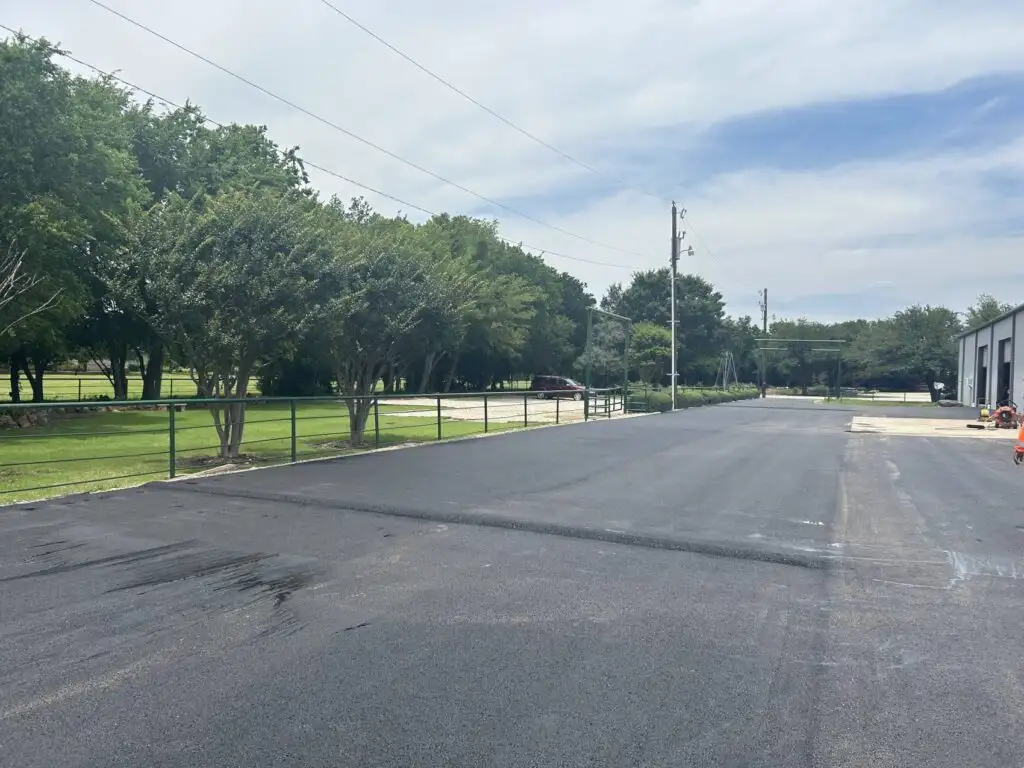
A parking lot takes a different kind of punishment than a driveway. It carries constant vehicle turnover, concentrated weight at entrances and loading areas, and, for many commercial properties, delivery trucks that put far more stress on the surface than passenger cars ever will. Parking lot paving that isn’t built for that load doesn’t fail gradually. It fails in patches, then in sections, until a lot that looked fine two years ago needs a full rebuild.
Gentry’s Paving Group has been paving parking lots across the Dallas-Fort Worth metroplex since 1988. Our crew splits its work evenly between residential and commercial projects, which means we’re just as comfortable pricing out a small retail lot as we are a multi-acre distribution center. Every parking lot job starts with the same question: what is this lot actually going to carry, day in and day out, and is the structure underneath built to handle it.
Ready to talk about your lot? Call (972) 792-0000 or fill out our contact form to get started.
What Parking Lot Paving Involves
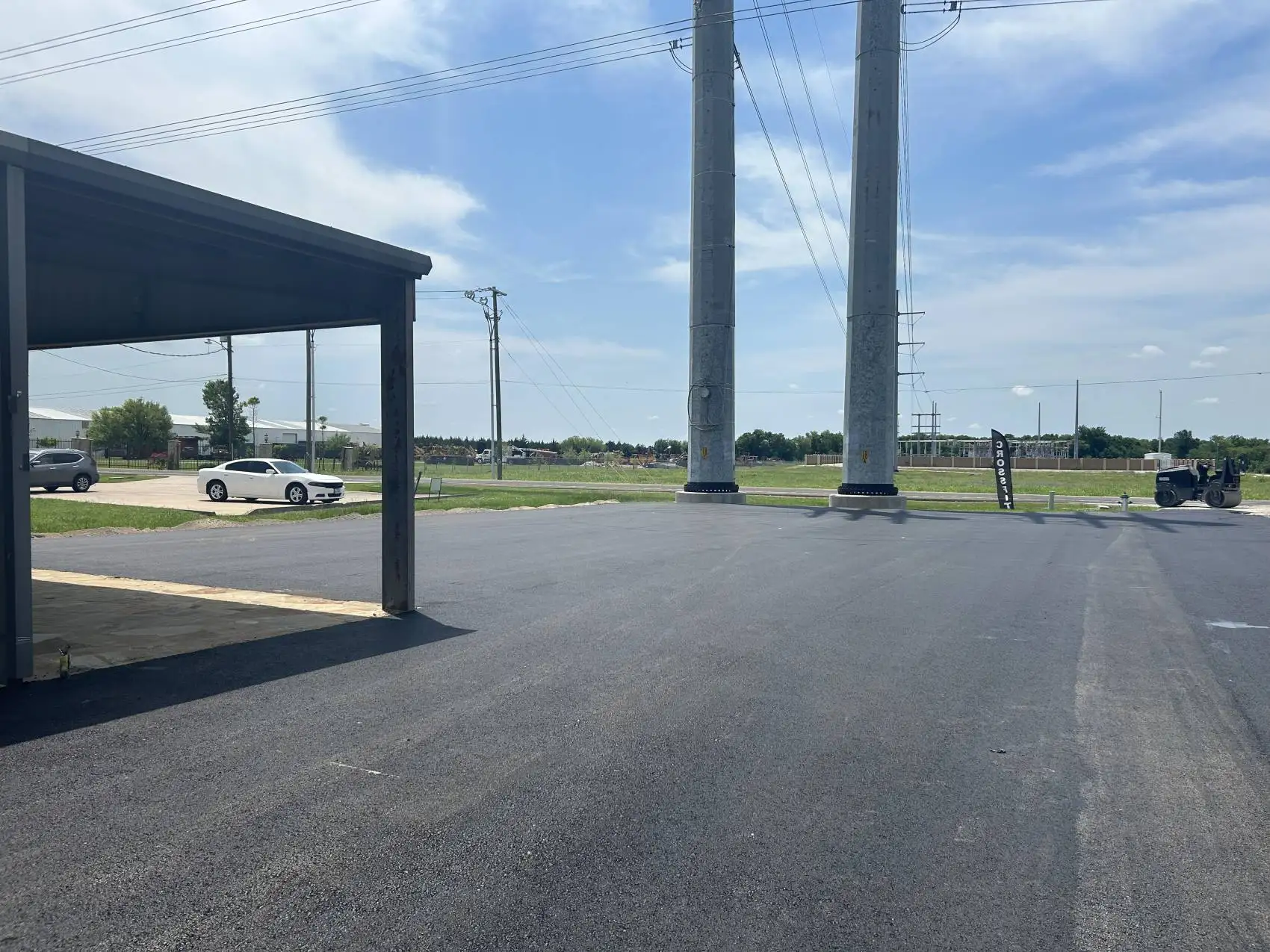
Parking lot paving is the construction of a new asphalt surface, from the ground up, built to carry the specific traffic a property will see. That’s different from resurfacing an existing lot or patching isolated damage. A new parking lot needs a subgrade that’s been checked and prepared for stability, an aggregate base that spreads vehicle weight across a wider footprint so the soil below isn’t overwhelmed, and asphalt courses engineered for the traffic mix the lot will actually carry.
Without that structure in place, even passenger vehicles will eventually break down a lot. Add delivery trucks, box trucks, or regular heavy equipment, and an undersized lot fails within a few years instead of lasting for decades. This is why parking lot paving isn’t a one-size-fits-all service. A retail lot serving mostly cars has different structural needs than a warehouse lot serving tractor-trailers at loading docks, and the design has to reflect that difference from the start.
What’s Included in Parking Lot Paving
- Site evaluation and subgrade prep. Checking soil stability and clearing organic material before anything is placed.
- Aggregate base installation. Compacted crushed stone that forms the structural foundation beneath the asphalt.
- Asphalt base and surface courses. The binder and surface layers that give the lot its strength and finished driving surface.
- Grading for drainage. Pitching the finished surface toward catch basins or drainage structures so water doesn’t pool.
- Catch basin installation and repairs. Where drainage structures are needed, we install or repair catch basins as part of the paving scope.
If your lot also needs milling and repaving of an existing surface rather than new construction, that falls under our Asphalt Milling & Paving service.
Our Process
- Site walk and assessment. We look at the existing site, traffic patterns, and any drainage low points before quoting the job. For commercial properties, we use satellite-based measurement to get accurate square footage and layout data without multiple site visits, which speeds up estimating on larger properties.
- Excavation and subgrade preparation. We remove existing pavement, topsoil, and any organic material down to a stable subgrade, then check that soil for moisture and stability. A parking lot is only as strong as the ground underneath it, and skipping this step is the single biggest cause of early pavement failure.
- Aggregate base placement and compaction. We place and compact a crushed stone base across the site. This layer distributes the weight of vehicles over a wider area of subgrade, so the soil never takes the full point load of a tire. Compaction quality matters as much as depth here. A well-compacted base outperforms a deeper, loosely compacted one every time.
- Grading for drainage. Before asphalt goes down, we grade the site so the finished surface will pitch toward drains, catch basins, or the lot’s perimeter. Standing water is one of the fastest ways to destroy a parking lot from the top down, so this step gets checked and rechecked.
- Binder course. The lower asphalt layer, using larger aggregate, goes down first. This course carries most of the structural load and gives the lot its backbone.
- Surface course. The top layer of asphalt, using finer aggregate, is placed and compacted to create the smooth, dense driving surface. This is the layer that resists weather and gives vehicles traction.
- Compaction and finish check. We roll and compact the finished surface, checking grade and drainage flow one more time before considering the job complete.
Warning Signs Your Parking Lot Needs Repaving
- Alligator cracking. Interconnected cracks that look like reptile skin. This almost always means the base has failed, and sealcoating or patching won’t fix it.
- Recurring potholes. A pothole that keeps coming back in the same spot after patching usually points to a base problem, not just a surface one.
- Standing water after rain. Pooling water means the grade has failed or drainage structures aren’t working, and that water is actively eroding the base underneath.
- Soft or spongy spots. Areas that feel like they give underfoot mean moisture has already reached the base.
- Widespread rutting or wavy pavement. If the surface has visibly deformed under traffic, the structure below is compromised.
When and How Often
In North Texas, asphalt paving runs most of the year, with our crews focused on new construction and repaving projects for roughly ten months out of twelve. Winter is when Texas asphalt plants close, which is when we shift our schedule toward chip and seal work instead. If your lot is showing structural failure, it’s worth having it evaluated as soon as the signs appear rather than waiting, since base damage compounds with every season it’s left unaddressed. Well-maintained lots with sealcoating and crack filling on a regular schedule generally go far longer between full repaving than lots where maintenance has been skipped.
Why Choose Gentry’s Paving Group
- 35+ years in business. Founded in 1988, Gentry’s Paving Group has been paving lots across North Texas for more than three decades.
- Family-owned and operated. Owner James Gentry has built the company through referrals and repeat clients, not heavy advertising.
- Equal experience with residential and commercial work. Our client base splits evenly between residential and commercial/industrial projects, so our crew has the range to handle a small business lot or a large distribution center.
- Satellite-based estimating for commercial projects. We use satellite measurement to quote large or complex lots accurately, without multiple site visits slowing down your timeline.
Where We Offer Parking Lot Paving
Gentry’s Paving Group provides parking lot paving to commercial and industrial properties within a 60-mile radius of our headquarters in Heath, Texas, including Rockwall, Forney, Terrell, Mesquite, Garland, Rowlett, Wylie, Sunnyvale, Kaufman, Royse City, and Greenville.
FAQ
How long does it take to pave a parking lot?
Timeline depends on lot size, site conditions, and how much excavation and base work is needed. Smaller commercial lots can move faster, while larger properties with more extensive drainage or subgrade issues take longer. We give a project-specific timeline after our site evaluation.
How thick should a parking lot be?
It depends entirely on the traffic the lot will carry. A lot serving mostly passenger vehicles needs less structural depth than one serving delivery trucks or industrial equipment. We design the base and asphalt courses around the traffic mix for each specific property rather than using one standard spec for every job.
Can you repave over my existing parking lot, or do you have to start from scratch?
It depends on the condition of the existing base. If the base is sound and the damage is surface-level, milling and repaving can be an option. If there’s widespread alligator cracking or base failure, a full rebuild is usually the more cost-effective long-term choice. We’ll tell you honestly which situation applies during our site evaluation.
Do you install or repair catch basins as part of parking lot paving?
Yes. Drainage is part of the paving scope, and that includes catch basin installation and repair as needed to make sure the finished lot drains correctly.
What affects the cost of a parking lot paving project?
Cost factors include the size of the lot, the condition of the existing subgrade, how much excavation is required, drainage needs, and the traffic load the lot needs to be built for. We provide a specific quote after evaluating your site.
Do you serve residential parking areas too, or only commercial lots?
We work with commercial and industrial properties for parking lot paving specifically, alongside our residential driveway paving services.
Ready to Get Your Parking Lot Paved Right?
Whether you’re planning a new lot or need to talk through a lot that’s showing signs of failure, Gentry’s Paving Group is ready to help. Call (972) 792-0000 or fill out our contact form to schedule a site evaluation.
Gentry’s Paving Group | 457 Laurence Drive, Suite 404, Heath, TX 75126 | (972) 792-0000